
Drilling Operations
1, Introduction
Drilling operations are central to the exploration and production of subsurface resources such as oil, gas, and geothermal energy. The process involves creating a borehole through the Earth’s surface to reach and produce hydrocarbons.
2, Definitions
Drilling is the process of creating a cylindrical hole in the Earth’s crust using a rotating drill bit attached to a drill string. It is the first step in establishing a wellbore that allows access to subsurface formations for evaluation, production, or injection purposes.
3, Objectives of Drilling operations
Access oil & gas reservoirs
Obtain geological data through well logging and coring
Enable production of hydrocarbons or injection of fluids
Conduct reservoir monitoring or pressure maintenance
4, Types of wells
Exploratory wells(wildcats): Determine the presence of hydrocarbons.
Appraisal wells: Evaluate the size and characteristics of a discovered reservoir.
Development wells: Produce oil or gas from known reservoirs.
Injection wells: Used for water, gas, or CO2 injection to maintain reservoir pressure.
5, Components of a Drilling rig
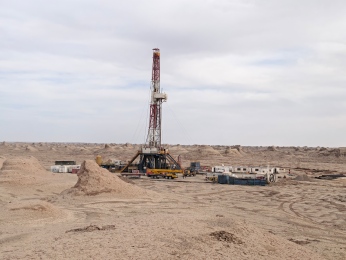
Derrick/Mast: Supports the drill string and hoisting equipment.
Rotary system: Includes rotary table/top drive and drill bit for drilling motion.
Circulating system: Pumps drilling fluid(mud) to the bit and back to the surface.
Blowout Preventer(BOP): Ensures well control and safety.
Power system: Engines and generators to operate the rig.
Mud system: prepares, circulates, and conditions drilling mud.
6, Drilling fluid(mud) Functions
Cool and lubricate the drill bit
Transport cuttings to the surface
Maintain hydrostatic pressure to prevent formation fluids from entering the well.
Stabilize the wellbore
7, Types of drilling fluids
Water-based muds(WBM)
Oil-based muds(OBM)
Synthetic-based muds(SBM)
Air or foam-based systems(used in underbalanced drilling)
8, Drilling process steps
-Rig-up and spudding: Assembling the rig and initiating the first hole.
-Drilling and casing: Alternating between drilling a section and running casing to prevent collapse and isolate zones.
-Mud logging and MWD: Real-time evaluation of formation properties.
-Well control and Blowout prevention: Maintaining pressure balance.
-Reaching total depth: Final depth is drilled, and logging tools are run.
-Well completion or Abandonment: Either prepared for production or sealed and abandoned.
9, Drilling Techniques
-Vertical drilling: Traditional, straight-down boreholes.
-Directional drilling: Steering the wellbore to a specific target.
-Horizontal drilling: Extends horizontally through the reservoir for maximum contact.
-Multilateral drilling: Multiple branches from one main wellbore.