
The Choke Manifold
Once the BOP shuts a well in, you still need a way to bring the pressure back down safely-that’s the choke manifold’s job.
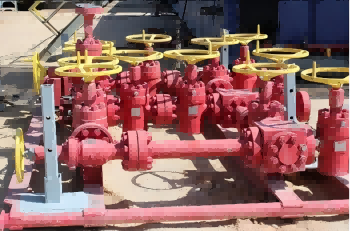
It’s a network of valves, chokes, gauges, and piping connected to the BOP. Rather than letting pressure escape suddenly, it lets the crew bleed it off gradually and in a controlled way,keeping bottom-hole pressure steady the whole time.
Two kinds of chokes do the work:
Adjustable chokes-can be opened or closed to fine-tune flow and pressure.
Fixed chokes-set at an opening size, used when a constant restriction is all that’s needed.
What it does:
-Controls flow from a shut-in well
-Holds bottom-hole pressure steady during well control
-Routes fluids to the mud-gas separator or flare system
-Prevents pressure spikes that could damage equipment or the formation
-Helps circulate out any gas or fluid influx safely
Disadvantages
It only works as well as the people running it-proper training is essential. The valves and chokes also take a real beating from high-pressure, abrasive fluid, so erosion is a constant concern, and if one component fails, the whole well control effort can be compromised.
Staying on top of it means: pressure-testing the manifold before drilling starts, checking valves, seals, and piping for leaks or wear, keeping gauges calibrated, lubricating valves on schedule, and running regular drills so the crew stays sharp on choke operations.
In short: the BOP is what stops the blowout. The choke manifold is what lets you manage the pressure safely afterward-two different jobs, both essential.