
Hammer Unions: Convenience and Consequence in High-pressure Operations
The weco hammer union is one of the most widely used connectors in the oil and gas industry-a quick-connect coupling designed for temporary pipe and flow line installations. Its wing nut is tightened by hammer rather than wrench, allowing crews to rig up and rig down high-pressure lines quickly and without specialized tools.
The design has been in use for decades and is now manufactured numerous companies, which means quality and compatibility can vary significantly between suppliers.
Applications
Weco unions are found across a range of industrial settings, including:
-Steel and chemical processing plants
-Marine dredging operations
-Strip mining sites
-Oil and gas drilling operations, particularly for high-pressure lines such as mud pumps, standpipes, cementing lines, and pressure sensors identification.
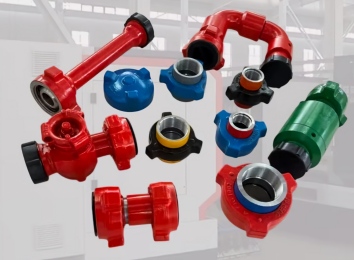
Each union is classified by a “Fig” number combined with a nominal pipe diameter, which together define its pressure rating. For example, a designation of 2” 1502 refers to a 2-inch union rated to 15000psi. Ratings across the product range span from approximately 1000psi to over 20000 psi.
The valve
When properly matched, hammer unions offer a genuine operational advantage: fast, tool-free assembly of high-pressure connections in the field. This efficiency is precisely why they remain the industry standard for temporary flow line installations.
The risk
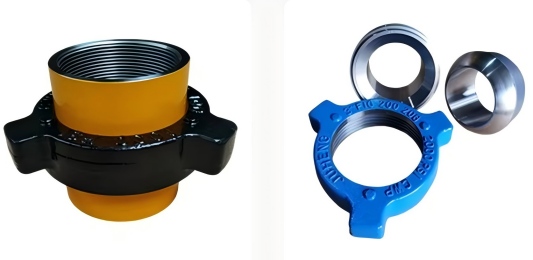
That same efficiency introduces a critical hazard. A higher-rated wing nut can physically thread onto a lower-rated union it was never engineered to mate with. The connection may appear fully engaged-and can even hold pressure temporarily without visible leaks-while only a fraction of the threads are actually load-bearing. Under full operating pressure, the union can fail catastrophically, ejecting components with significant force.
The takeaway
The same speed that makes hammer unions valuable is what allows a mismatch to go undetected. The solution isn’t to slow down operations-it’s to embed thread and pressure-rating verification into standard procedure, without exception.